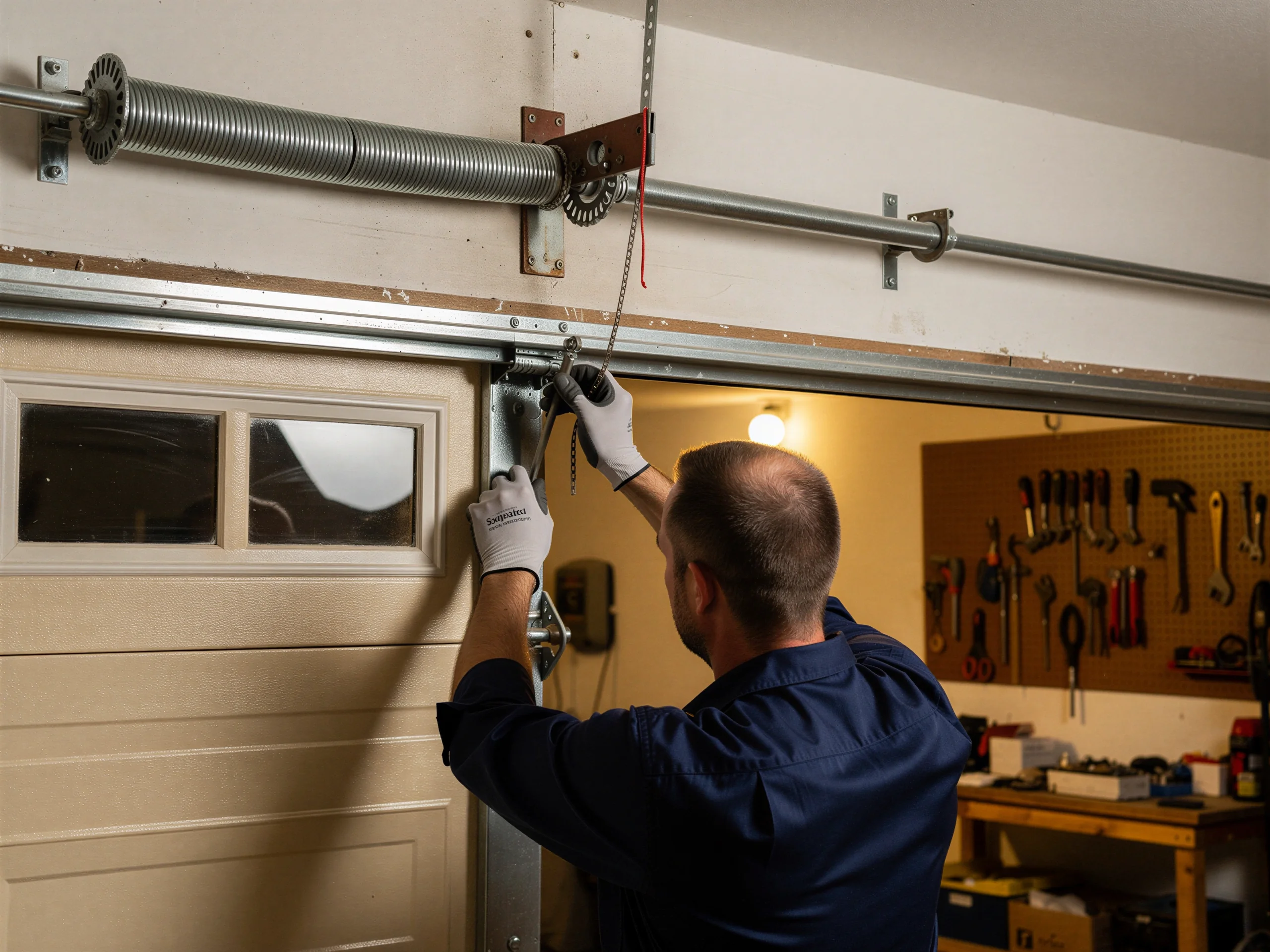
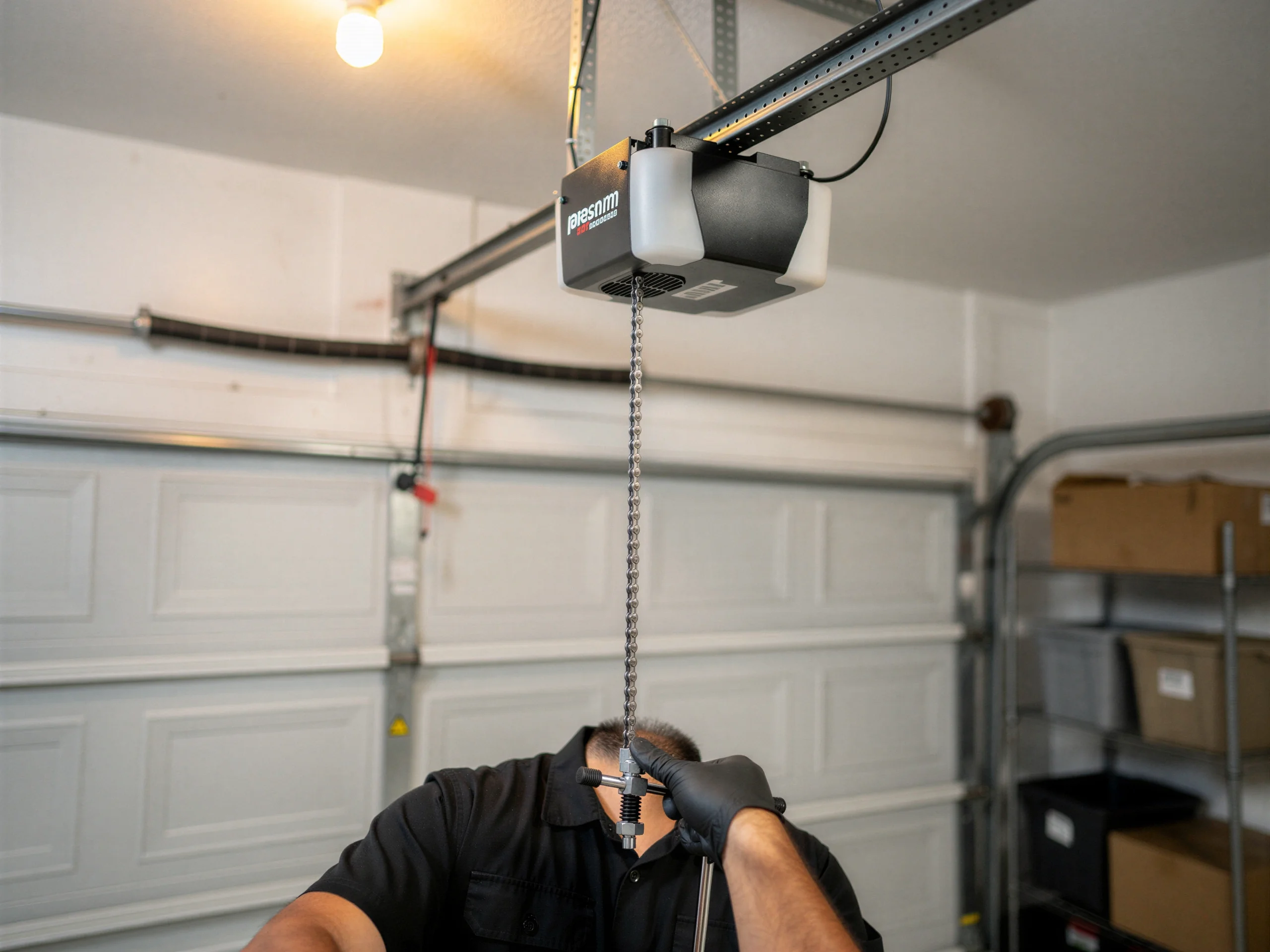
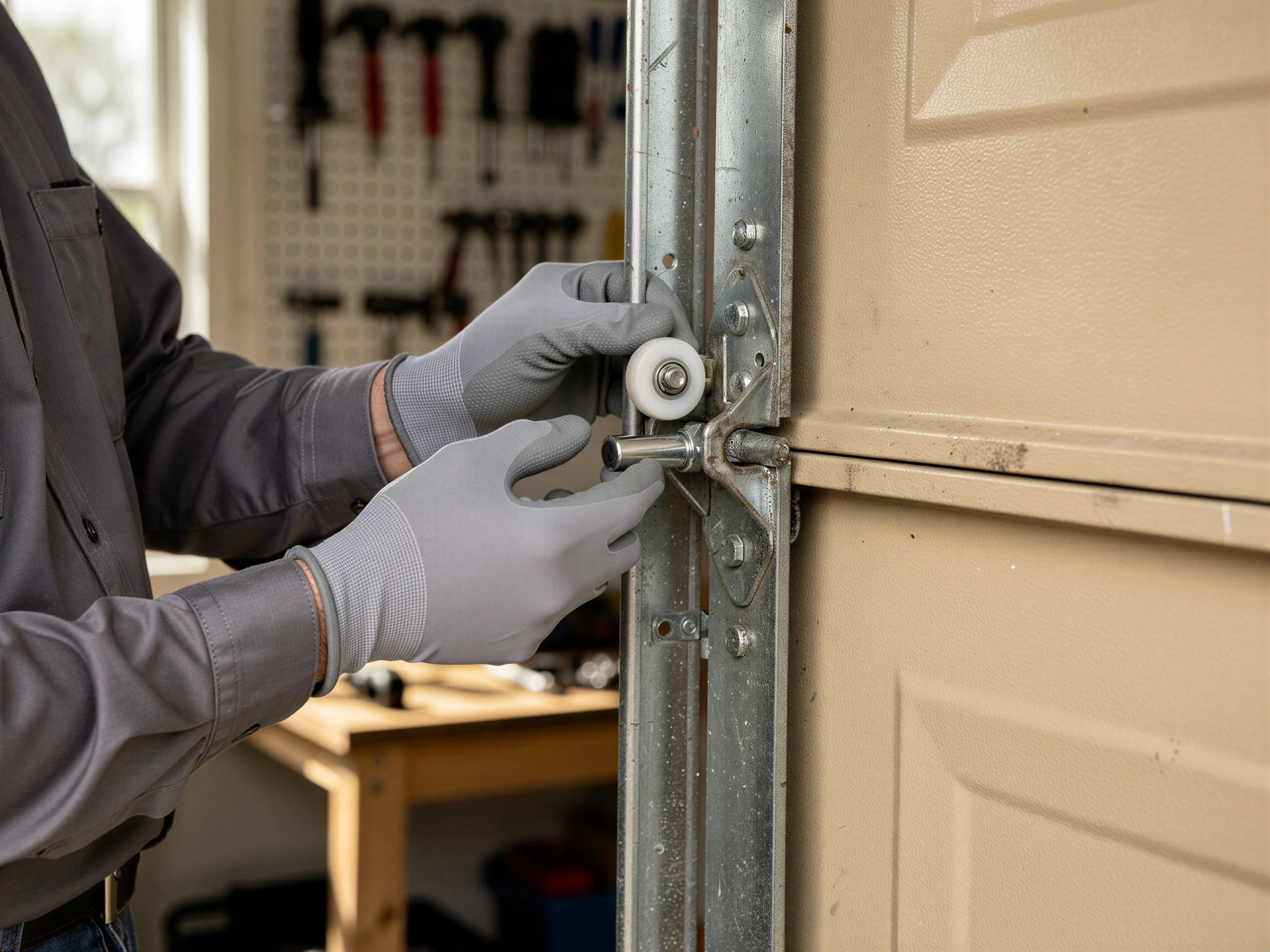
The housing stock here is newer than most of what we cover - built mostly around 2004, inside the service area's broader 1973-2012 range but on the later end of it. That matters because torsion springs are rated for a cycle count, not a calendar date, and a lot of those 2004-era doors are now old enough that their original springs are nearing or past that rated life. Add a cold-moderate climate to that - the kind where overnight temperatures swing enough to stiffen the metal without the deep freezes that crack it outright - and you get springs that fatigue quietly over a few winters before they let go on an ordinary morning, usually when the door's already been opened and closed a few times to warm up.
We also see sensor misalignment more than outright hardware failure on these newer builds, since post-2000 openers lean harder on photo-eye safety sensors than the older mechanical setups did. A sensor nudged out of line by a bumped bracket will stop a door cold and look like a much bigger problem than it is. That's worth checking before anyone assumes the worst.