Local detail
Where People Go Wrong
Most of the garage door calls we see start with the same assumption: the opener died, so it needs replacing. That's sometimes true. But a lot of houses in the Athens service area were built between 1973 and 2012, with the bulk going up in the 1980s and 90s, and in a good share of those houses the opener was added after the garage was wired, not as part of the original build. That means the circuit feeding it is often shared with something else in the house, and a dip or cut in power trips it long before the motor itself is worn out.
People also assume a battery backup is a storm-only feature. It's not. A short power blink from the grid, the kind that barely registers inside the house, can still knock an opener's logic board out of sync and leave the door reading as open when it's shut, or vice versa.
One thing we don't do: rewire electrical panels or run new circuits. If the problem traces back to the house wiring itself, that's an electrician's job, and we'll tell you plainly when that's where the trouble sits.
The area
When to Call Someone
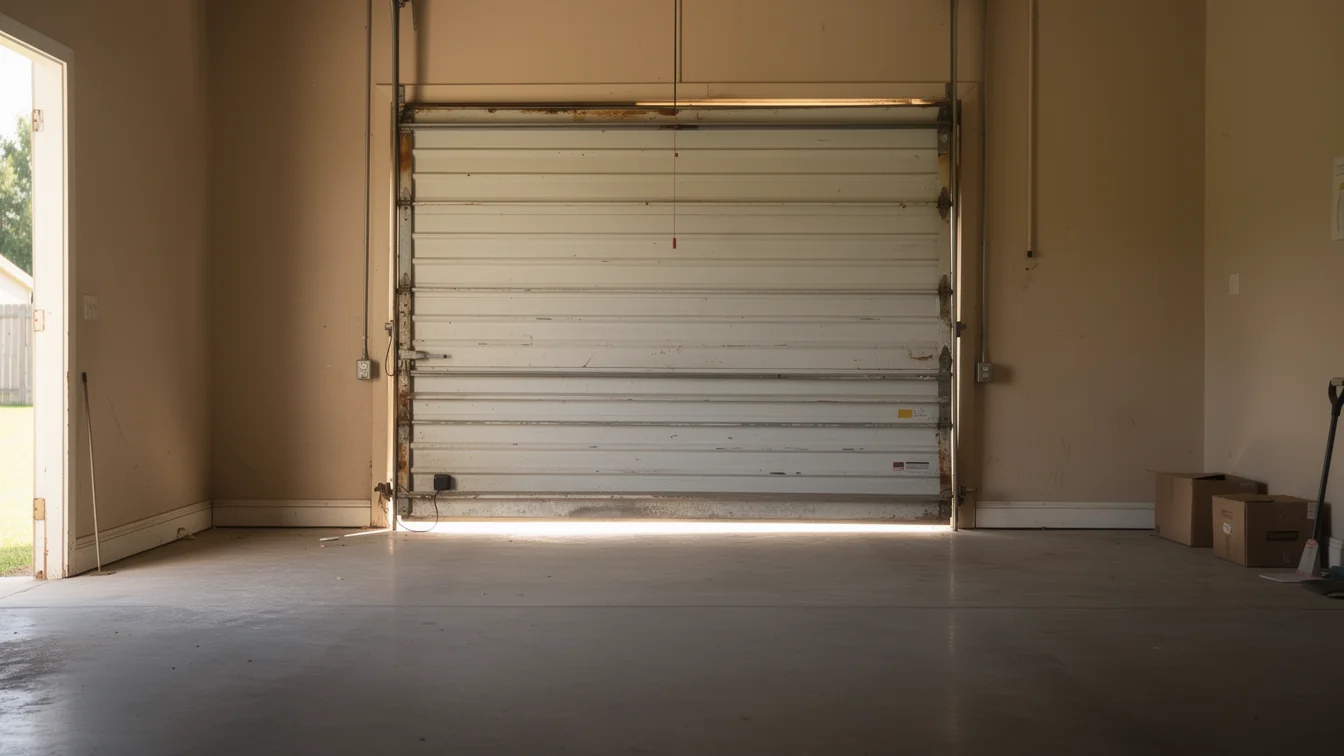
If the opener light blinks a set number of times and won't run the door at all, that's usually a fault code worth a call before you start pulling the emergency release cord. If the door won't budge even by hand after an outage, stop pulling on the chain or belt and call, because forcing it with the trolley still engaged can bend the track.
A lot of the owner-occupied houses in this area are old enough now that the opener is on its second or third decade. If yours cuts out every time the power blinks, rather than just during a real outage, that's not a power problem anymore, it's the opener telling you it's at the end of its service life.
We won't tell you to replace a unit that's still doing its job just because it's old. If it's resetting cleanly after outages and running quiet, there's no reason to swap it out. Call when the behavior changes, not on a schedule.
What we find
What Local Conditions Do
Athens sits in a cold-moderate climate band, which means winters bring real cold snaps but not the deep-freeze extremes you'd get further north. That matters for openers in a specific way: most garages here aren't heated, and the battery backup units built into newer openers lose a noticeable chunk of their runtime once the garage drops into the 30s and below. A backup rated for a few hours in a warm garage might give you half that on a cold night, right when a winter power cut is most likely to happen.
The freeze-thaw swing that comes with this climate band also works on the photo-eye sensors and the track itself. Metal contracts in the cold, and a track that was a hair out of alignment in October can bind in January. Combine that with a power cut during a cold snap and you get the worst version of the call: a door that won't open by opener or by hand because the cold has it jammed at the same time the power's out.
How we work
The Problem
Put the pieces together and the pattern is pretty clear. Housing in this area went up mostly between 1973 and 2012, with a concentration in the 1980s and 90s, which means a large share of openers out there are old enough to be nearing or past their expected life. Pair that with a cold-moderate climate that stresses batteries and tracks every winter, and add in a power grid that, like most rural and suburban grids, takes the occasional hit during a cold snap, and you've got a setup where doors fail at the worst possible moment: stuck shut when you need to leave, or stuck open when you need it closed and the house is cold.
Across the broader service area, with 7,629 households and 6,078 owner-occupied houses, that's not a rare combination, it's a common one. The honest fix isn't a single product, it's knowing whether your specific opener is a wiring problem, a battery problem, or just old. That's a five-minute look, not a guess over the phone.
Talk to a local pro
Garage door trouble in Athens?
Same-day service with honest, upfront quotes.